Marvel Rivals hardstuck, what a Grandmaster spectating session reveals about ranked excuses
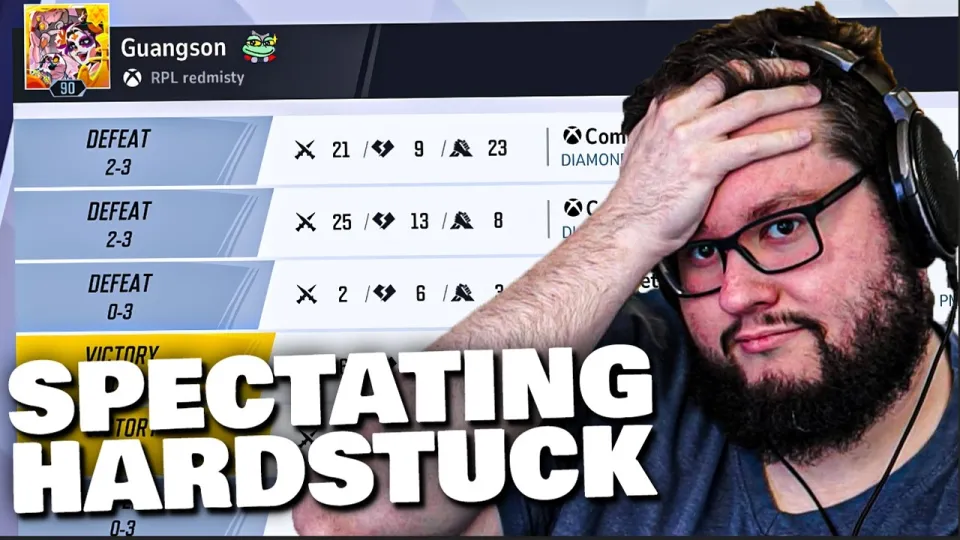
Video: I Spectated Someone Who Claimed To Be Hardstuck In Marvel Rivals
You can order the same kind of articles for your own video to boost it on YouTube and Google. Just message the Telegram bot @sat_sit_bot. The bot writes and publishes the articles itself (with your YouTube video embedded) on popular topical websites (no ads). Try it free: 50 articles on us.
Key takeaways
- Flats spectated a Marvel Rivals player who insisted his teammates were the reason he could not climb.
- The reviewed account sat in Grandmaster while running a negative win rate, according to the streamer's breakdown.
- The player described himself as a Spider-Man main but was reviewed on support, playing Cloak & Dagger with Dagger held almost the whole match.
- Recurring errors included walking past a health pack while looking for one and ultimates that missed their targets.
- Viewers noted that the same profile type shows up in promotion games at 99/100 to the next rank.
Spectating a self-described hardstuck Marvel Rivals player, Grandmaster-level streamer Flats found the opposite of what the player claimed: the account had climbed to Grandmaster on a negative win rate, and the mistakes on screen were the player's own. The session is a case study in how hero-shooter ranked systems reward volume over quality, and why "my teammates hold me back" is usually the least useful diagnosis a player can make. Flats streams these reviews live on his Twitch channel.
What "hardstuck" actually meant in this Marvel Rivals review
The player opened by blaming matchmaking and teammates for his rank, but the account history told a different story. In Marvel Rivals, ranked points are awarded and deducted by performance-influenced MMR, and a player who grinds enough games with a win rate below 50% can still drift upward when the points gained per win outpace the points lost per loss. That is exactly what the review showed: a Grandmaster badge earned through volume rather than improvement, which is why the player felt stuck — the rank had outrun the skill that was supposed to support it. The label "hardstuck" describes a plateau, but plateaus have causes, and in this case the cause was visible in every fight.
The Cloak & Dagger problem: playing half a hero
The most repeated observation of the session was that the player ran Cloak & Dagger as if the character were a single hero. Dagger stayed out for nearly the entire match, which cuts off the kit's real value: Cloak's invisibility, the blind, and the damage window that make the duo one of the strongest support picks in Marvel Rivals. Support players who never swap forms lose the escape tool that keeps them alive against dive compositions, and they lose the ability to bail out a teammate caught in a burst ultimate. On top of that, the player's positioning kept the healing beam pointed at a backline Magneto rather than at the duelists actually taking damage, so the healing numbers looked busy while the team still died.
Mistakes a Grandmaster lobby should not contain
Several errors in the review would be flagged in Platinum, let alone Grandmaster:
- Walking past a health pack while visibly searching for a health pack, a moment that needs no commentary to land.
- Ultimates fired into empty space or into targets that had already moved, including a Magneto ultimate that ended with the character face-down in open ground.
- No accountability after lost fights — deaths were attributed to the team rather than to the positioning that caused them.
- A hero pool built around Spider-Man, a high-execution dive pick, while the fundamentals of the support role went unlearned.
The Spider-Man detail matters. Dive heroes reward mechanical confidence and punish sloppy engagement timing, and players who main them often develop the habit of blaming everyone else because their own failures are harder to see in a fast fight. When that mindset transfers to support, the result is a player who queues the role for shorter times but never learns it.
Why Marvel Rivals lets players climb with a losing record
Marvel Rivals uses a rank progression system with protection at some tiers and performance-based adjustments, which means a determined player can reach Diamond and Grandmaster without a positive win rate. That design is generous on purpose: it keeps the ladder moving and keeps casual players engaged. The side effect is a population at high ranks whose game sense lags behind their badge, and that population is what makes mid-ladder matches feel inconsistent. A negative win rate is not a moral failing, but it is a signal — if you need more wins than losses just to hold your rank, the rank is borrowing against skills you have not built yet.
Typical viewer questions about ranked excuses
Viewers watching the review raised the same doubts that come up in every discussion of ranked climbing. The first is whether teammates really can hold a player back: yes, in individual matches, but not across hundreds of games, because the only constant in that sample is you. The second is whether a Grandmaster badge means anything anymore — it means time invested, and it means something more only when the win rate backs it up. The third is whether off-role play is acceptable at high ranks: it is, if you learn the role's fundamentals first, which is the step this player skipped. The fourth is how to actually fix it, and the answer is unglamorous — pick one role, review your own deaths, and stop measuring progress by rank instead of by decisions.
All the links from the Flats Marvel Rivals stream
- Live spectating and ranked reviews: https://www.twitch.tv/flats
- Community discussion and coaching talk: https://discord.gg/flats
- Stream announcements: https://twitter.com/Flats_Ow
- Short clips and highlights: https://www.tiktok.com/@flats_ow
- Stream updates: https://www.facebook.com/FlatsTTV
Conclusion: the rank is a receipt, not a verdict
This Marvel Rivals spectate works because the player's own words set the trap and the gameplay sprang it. A Grandmaster badge earned on a losing record is a receipt for hours played, not proof of understanding, and the Cloak & Dagger match showed exactly which fundamentals were missing: form swapping, healing priority, ultimate timing and basic map awareness. The fix is available to anyone willing to watch their own replays without defending them. For more live reviews and ranked breakdowns, follow Flats on Twitch, where these sessions run unedited.
Source: I Spectated Someone Who Claimed To Be Hardstuck In Marvel Rivals · Markdown version
Questions & answers
Can teammates really keep you hardstuck in Marvel Rivals?
In a single match, yes — one player can lose a game. Across hundreds of games, teammates average out and the only constant variable is your own play. A negative win rate over a large sample is evidence about you, not about matchmaking.
How can someone reach Grandmaster with a losing record?
Marvel Rivals awards rank points in a way that can outpace losses when a player queues enough games, especially with performance adjustments and rank protection at some tiers. The badge reflects time invested more than skill level.
Is it bad to main Spider-Man in Marvel Rivals?
No, but dive heroes demand high mechanical consistency and punish bad engagement timing. Players who main them sometimes develop an excuse-first mindset, and that habit becomes a real problem when they switch to support or tank.
What should a stuck player change first?
Pick one role and learn its fundamentals before flexing: for support, that means swapping forms on Cloak & Dagger, prioritizing healing on the players taking damage, and tracking ultimate timing. Then review your own deaths instead of your teammates' mistakes.