How to follow VALORANT Champions Shanghai group stage like a pro analyst
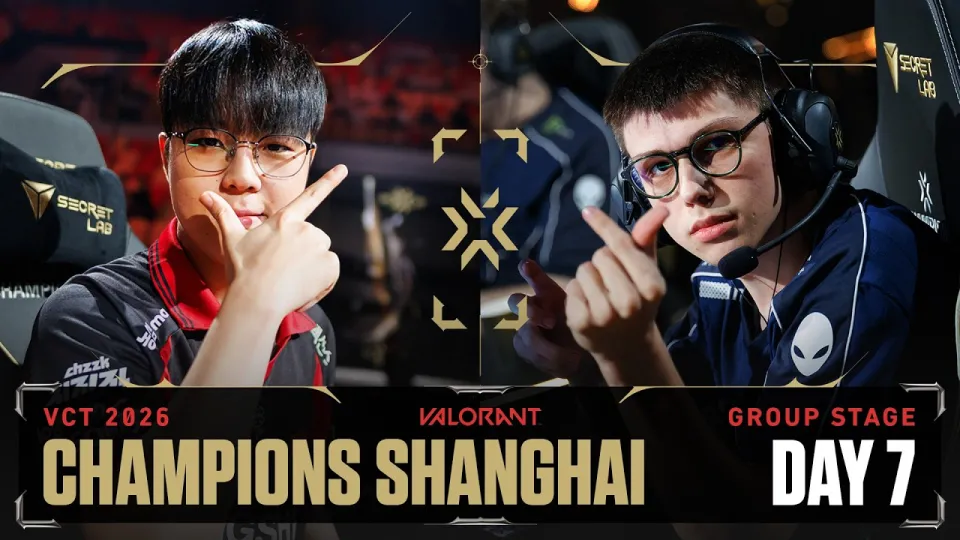
Video: VALORANT Champions Shanghai — Group Stage — Day 7
You can order the same kind of articles for your own video to boost it on YouTube and Google. Just message the Telegram bot @sat_sit_bot. The bot writes and publishes the articles itself (with your YouTube video embedded) on popular topical websites (no ads). Try it free: 50 articles on us.
Key takeaways
- 16 teams from Americas, CN, EMEA and Pacific compete at VALORANT Champions Shanghai, running September 24 to October 18.
- Group Stage Day 7 is the seventh broadcast day of the opening phase, streamed by the VALORANT Champions Tour channel.
- Two different teams won Masters events in 2026, so Shanghai seeds a new champion against established favorites.
- Viewers flagged repeated tech pauses on Day 7, a recurring theme across the group stage broadcast.
- Chinese squads drew heavy criticism for losing eco rounds and 5v2 situations, prompting debate about CN's level.
- Official updates and clips land on the VALORANT Esports X account at https://x.com/valorantesports.
To follow VALORANT Champions Shanghai group stage properly, treat each broadcast day as a data set rather than background noise: track the 16-team field across Americas, CN, EMEA and Pacific, note which teams are converting eco and man-advantage rounds, and use the official VALORANT Esports X account for schedules, results and clips between maps. The tournament runs from September 24 to October 18, and Day 7 of the group stage, published by the VALORANT Champions Tour channel, is a useful snapshot of where the meta and the standings stand.
What the VALORANT Champions Shanghai group stage actually is
VALORANT Champions Shanghai is the season-ending world championship, and the group stage is the phase that cuts a 16-team international field down before the playoff bracket. Teams qualify through the four regional circuits — Americas, CN, EMEA and Pacific — and arrive with different preparation time, different map pools and very different levels of international exposure.
The event description frames the stakes clearly: two Masters events in 2026 produced two different champions, which means the year has no single dominant team. That matters for reading the group stage, because seeding and bracket luck can decide more than raw firepower. The tournament is supported by partners including AWS, Coinbase, EWC, ENC, Globant, HyperX, Mastercard, OnePlus, Red Bull, Secretlab and Verizon, which is also a hint at the production scale behind each broadcast day.
Day 7 sits deep enough into the group stage that narratives have formed but nothing is settled. That is exactly the point where a viewer can learn the most: teams start showing adjusted map picks, more conservative save decisions and targeted agent bans.
How to read a group stage broadcast day without a spoiler
The simplest way to watch a VALORANT VOD is to control information before you control the timeline. Broadcasts are long, and the chat and thumbnails give away results instantly.
- Open the video in a private window or with history cleared so recommendations do not spoil the outcome.
- Disable chat and comments before pressing play; the top comments on Day 7 include direct references to specific moments and outcomes.
- Jump between maps instead of watching linearly if you only care about the series result.
- Keep the official VALORANT Esports X account open in a second tab for the bracket and standings, not for live reactions.
- Note the score at each map start so a mid-series tech pause does not break your sense of momentum.
This is not just about avoiding spoilers. A group stage day contains several series, and watching them in the order they were played preserves the context of what each team already knew about the standings when it stepped on stage.
Why tech pauses keep interrupting the VALORANT Champions Shanghai stream
Tech pauses were the most repeated complaint about Day 7, and they are a structural feature of large international LANs rather than a one-off glitch. When a match halts, the broadcast usually fills time with analysis, replays or sponsor segments, and the pause can last long enough to reset a team's momentum.
For viewers, the practical response is to expect at least one pause per broadcast day and plan around it. For teams, pauses matter tactically: a long break after a lost pistol round gives coaches time to rework the next buy, and a pause during a comeback can cool a hot streak. Analysts who track Champions often separate a team's "pause-adjusted" performance from its raw round differential, because a stoppage can hide a genuine strategic collapse or mask a lucky run.
The Day 7 comments also flagged a pause that shifted a timestamp, which is a reminder that VOD timestamps and live timings rarely match exactly. If you are building notes from a broadcast, log the round number and the map rather than the clock.
What the CN results reveal about the regional gap
The harshest thread running through Day 7 discussion concerned the Chinese teams, and the criticism was specific rather than generic. Viewers pointed to lost eco rounds, blown 5v2 advantages and a lack of improvisation when set strategies broke down.
Those are the classic symptoms of a region that has strong prepared executes but thinner mid-round adaptation. In VALORANT, eco upsets and man-disadvantage losses usually come from three things: over-extending after a pick, poor spacing on retakes, and utility spent too early. When a team loses multiple 5v2s in one event, it is rarely about aim — it is about communication under time pressure.
The counter-argument in the comments was that other regions had stronger teams that did not even qualify, which is a fair point about format and qualification depth. Both things can be true: CN's representatives can underperform relative to expectations while the qualification system still leaves good teams at home. For a viewer, the useful takeaway is to judge CN teams on retake conversion and post-plant discipline, not on highlight clips.
How to judge which teams are real contenders in Shanghai
Group stage results are noisy, so the reliable signals are the ones that repeat across maps. A contender in Shanghai usually shows three traits.
- Eco discipline: winning or at least trading down on save rounds, and never gifting a free 5v2.
- Map pool depth: a ban phase that does not collapse when the opponent targets the comfort pick.
- Adaptation after a pause or a timeout: a visible change in setup within two rounds, not five.
A team that wins on individual heroics but loses structure tends to fall in the playoff bracket, where opponents have a full week of VOD to study. A team that wins ugly — grinding out retakes, converting man advantages — is usually the safer bet to go deep.
The 2026 season complicates this further because two Masters titles went to two different rosters. That means there is no incumbent to measure against, and group stage form is the only real evidence available before the bracket.
Where to get official VALORANT esports updates and links
Official channels are the fastest way to confirm schedules, scores and roster news without spoiler risk from fan accounts. The full set of official destinations:
- X/Twitter: https://x.com/valorantesports
- Facebook: https://www.facebook.com/ValorantEsports/
- Instagram: https://www.instagram.com/valorantesports/
- TikTok: https://www.tiktok.com/@valorantesports
- Twitch: https://www.twitch.tv/valorant
- YouTube: https://www.youtube.com/@ValorantEsports
- Kick: https://kick.com/valorant
- Event photos: https://www.flickr.com/photos/valorantesports/
- Official news: https://www.valorantesports.com/news
- Main site: https://www.valorantesports.com
For VODs specifically, the VALORANT Champions Tour YouTube channel publishes full broadcast days, which is where the Day 7 group stage upload lives. Watching the full day rather than a highlight reel is the only way to see the pauses, the economy decisions and the adaptation that highlight packages cut out.
Frequently raised questions from the Day 7 audience
Three themes dominate viewer discussion around this broadcast day: the frequency of technical stoppages, the strength of the Chinese representatives, and specific in-game moments that looked confusing on first watch. A Yoru clone holding a site, for example, is a common source of momentary confusion because the clone mimics player movement and can bait utility from defenders.
Another recurring question is why certain regions seem to have deeper fields than their Champions representatives suggest. The answer sits in qualification: regional slots are fixed, so a strong fourth-place team in one region can miss the event while a weaker first seed elsewhere attends. That structural quirk is worth remembering before drawing conclusions from a single group stage day.
The bottom line on VALORANT Champions Shanghai
The group stage is where a 16-team field reveals which rosters can convert advantages and which ones rely on prepared plays that break under pressure. Day 7 of the Shanghai broadcast, published by the VALORANT Champions Tour channel, captures that tension well: technical interruptions, sharp criticism of the CN representatives, and a wide-open title race after two different Masters champions in 2026. Watch the full day rather than the highlights, log rounds instead of timestamps, and judge teams on eco conversion and retake discipline. For schedules, results and official clips, follow the VALORANT Esports X account — it is the fastest verified source during a live event.
Source: VALORANT Champions Shanghai — Group Stage — Day 7 · Markdown version
Questions & answers
How many teams play in the VALORANT Champions Shanghai group stage?
Sixteen teams qualify from the four regional circuits: Americas, CN, EMEA and Pacific. The group stage reduces that field before the playoff bracket, and the event runs from September 24 to October 18.
Why were there so many tech pauses during the Day 7 broadcast?
Large international LANs regularly hit hardware, server or setup issues, and each stoppage forces the broadcast into filler segments. Pauses can run long enough to affect a team's momentum, so analysts often separate a team's performance before and after a break.
Are the Chinese teams really the weakest region at Champions?
The Day 7 criticism focused on specific failures — lost eco rounds, blown 5v2s and weak improvisation when set plays broke. That is a real pattern, but qualification slots are fixed per region, so strong teams from other regions can miss the event entirely, which skews the comparison.
Where can I watch full VALORANT Champions match days instead of highlights?
The VALORANT Champions Tour YouTube channel posts full broadcast days, including the Day 7 group stage upload. Official schedules and results are posted on https://x.com/valorantesports, and the main site is https://www.valorantesports.com.